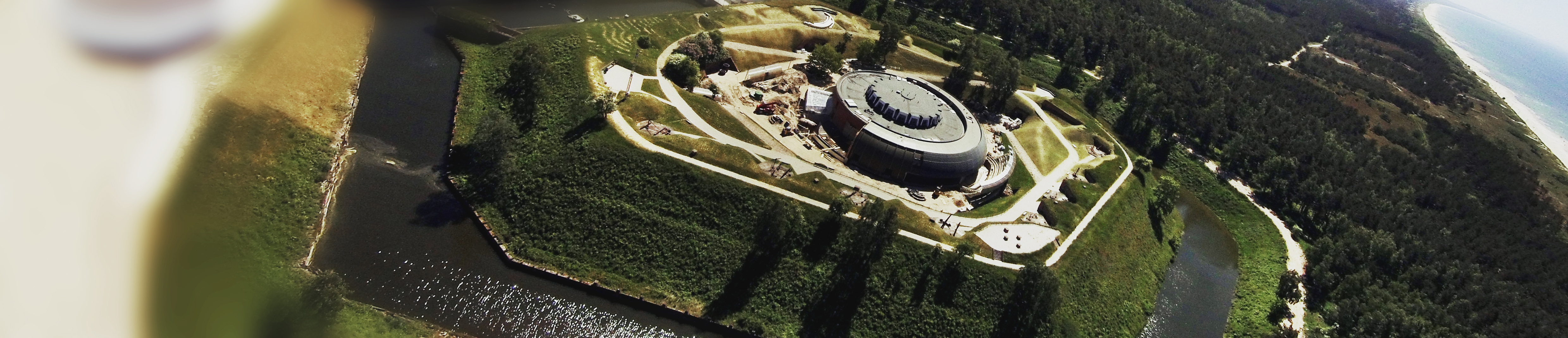

The exhibition is on display at the Lithuanian Sea Museum. Tickets: www.ljm.lt (Sea Museum and Aquarium)
he exhibition 21 Days in the Baltic Sea invites visitors to revisit the summer 2025 expedition during which swimmer Meinardas Valkevičius crossed the Baltic Sea from Sweden to Lithuania. Over 21 days, he covered 366 kilometres under his own power – a journey that became not only a test of physical endurance, but also an emotional and psychological challenge.
The exhibition presents the equipment used during the swim – a tow float, goggles, swimming cap, gloves, socks, wetsuit and watch. Alongside it are photographs by Marius Domkus, who accompanied the swimmer in a boat. Twenty-one images tell the story of 21 days of the journey, capturing different moments of everyday life in the Baltic Sea and a world where only the sky, the water and constant forward movement remain.
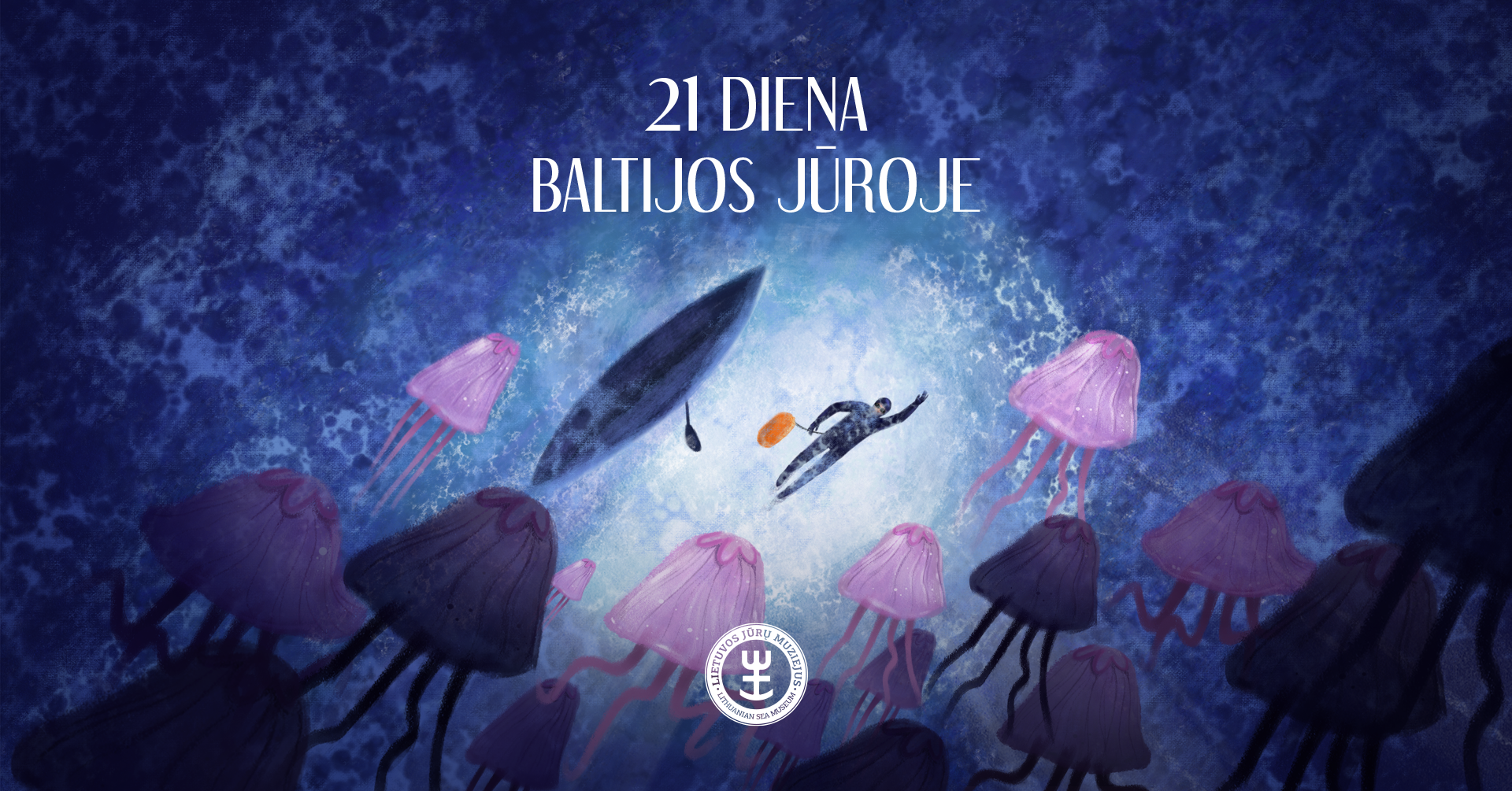
The main highlight of the exhibition is the 210-second animated film 21 Days in the Baltic Sea, created by Meinardas Valkevičius. It is not a documentary report, but a personal artistic interpretation of the journey, becoming a kind of inner diary. Through animation, the film conveys experiences that cannot be fully captured by a camera: storms, fog, cold, encounters with marine life, a submarine unexpectedly appearing on the horizon, loneliness, longing for land, the dedication of the support team and the constant struggle with oneself.
The pulsating frames of the animation recreate the sensation of being at sea, when the days begin to resemble one another and the most important thing becomes moving towards the goal. The film is created as a cycle – it can be started from any point, just as the sea itself has no single, correct starting point.
21 Days in the Baltic Sea is not only a story about 366 kilometres. It is a story about the people who were there throughout the journey, the decisions made every day, the courage to step into the unknown and the boundary that shifts with every nautical mile covered.
The exhibition invites visitors to take a closer look at this extraordinary journey and briefly immerse themselves in a world where a person, the sea and a dream meet face to face. A world where “impossible” is merely a word.
The exhibition is on display at the Lithuanian Sea Museum. Tickets: www.ljm.lt (Sea Museum and Aquarium)
Today, the Lithuanian seaside is inseparable from summer holidays, but two centuries ago the Baltic coast was very different – harsh, not always welcoming and feared because of shifting dunes and the power of the sea. In the 19th century, as the sand dunes were stabilized with woven barriers and vegetation, the coast gradually became more attractive as a place for leisure. This marked the beginning of the resort era, which transformed the face of the Lithuanian coast and the culture of leisure.
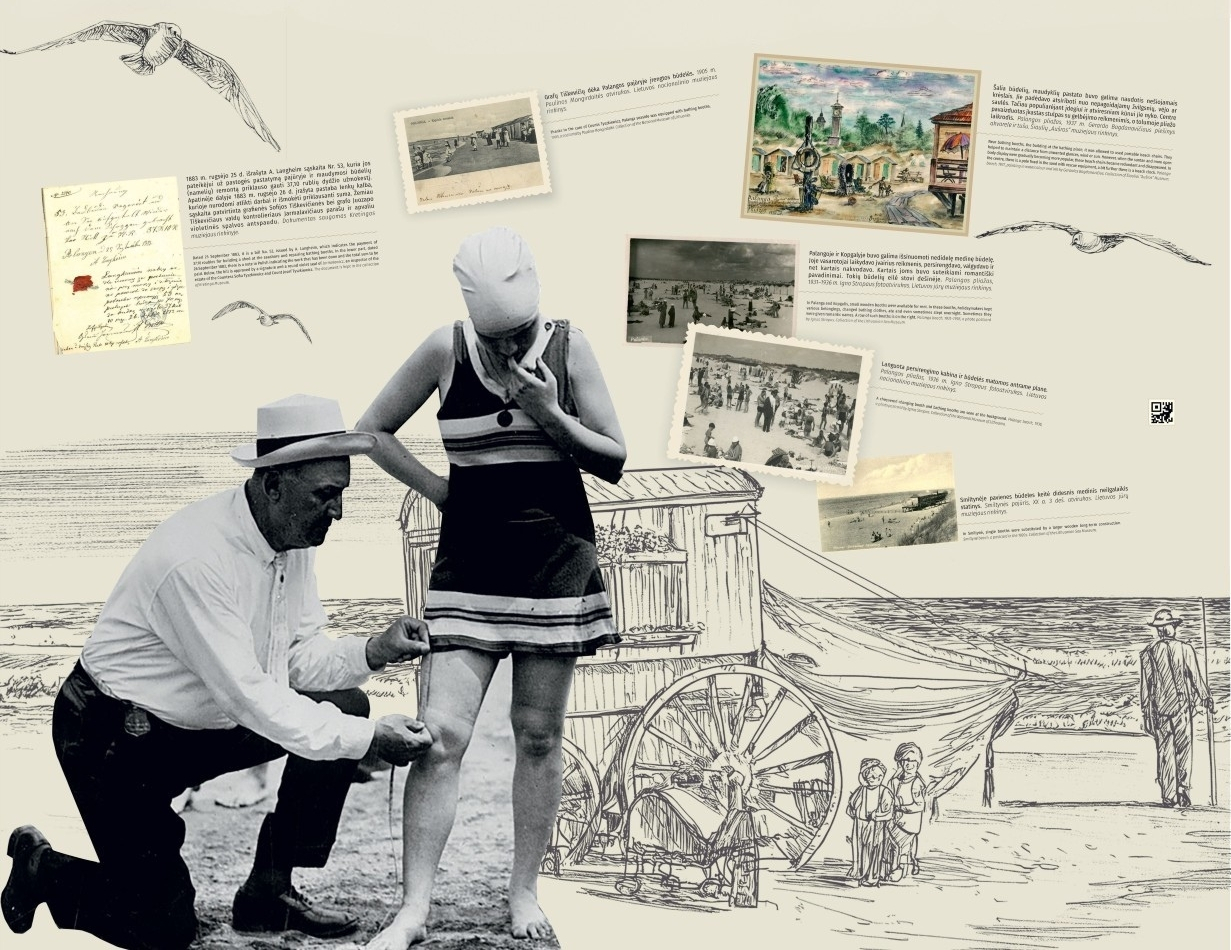
The exhibition Leisure on the Lithuanian Coast, 1806–1939 tells the story of this transformation – from the first resorts and royal promenades to the interwar summer resorts, where seaside holidays became inseparable from fashion, sport, entertainment and social life.
Visitors can discover how bathing traditions and beach fashion changed over time. In the 19th century, men’s and women’s bathing hours were regulated by drumbeats, while special bathing machines were provided for holidaymakers seeking privacy – wooden cabins on wheels where women could change clothes and enter the sea without being seen. Later, beaches became mixed, swimsuits became shorter, and some bolder female holidaymakers even had to face an official measuring the length of their skirts.
Attitudes towards the sun also changed. For a long time, a suntan was considered a sign of the lower classes, so ladies sheltered under parasols and wide-brimmed hats. At the beginning of the 20th century, tanning gradually became fashionable, and by the interwar period the seaside had become a colourful space not only for swimming, but also for sports and active leisure.
The exhibition also explores the journey to the seaside, which for a long time was both a luxury and an adventure. Holidaymakers travelled to resorts by horse-drawn carriages, and later by trams, buses, trains, steamships and ferries. Improved transportation made the coast increasingly accessible to a wider range of people, while the yacht club established in Smiltynė contributed to the growth of sailing culture.
The seaside resorts offered much more than the sea. The Kurhaus buildings in Palanga and Smiltynė housed reading rooms, concerts, exhibitions and dances, while tennis courts and summer cafés provided additional entertainment. On the beaches, visitors could enjoy the seaside halls, where coffee, ice cream and snacks were served. Holidaymakers played badminton and tennis, watched gymnastics performances in the dunes, and in 1933 a gliding school established in Nida gave the resort an even more distinctive character.
Attitudes towards local residents and their way of life also gradually changed. At first, affluent holidaymakers avoided fishermen’s nets and the smells associated with fishing, but over time they discovered the taste of fresh fish, conversations with fishermen and entertainment on their boats. The seaside became not only a place to observe the sea, but also a space in which to experience local culture.
The exhibition design, created by Klemencov Group, transports visitors back to the seaside of the last century and its distinctive aesthetic. The exhibition invites visitors to explore a period when the harsh Baltic coast gradually became a sought-after holiday destination, and seaside leisure became an important part of Lithuanian culture and way of life.
The exhibition reminds us that the seaside holidays we take for granted today are not inevitable. They are the result of a long cultural and social process that has become an important part of Lithuania’s coastal heritage.
The exhibition was created with the support of the Ministry of Culture of the Republic of Lithuania.
The exhibition is on display in the “Jūros sala” exhibition space at the Lithuanian Sea Museum’s Dolphinarium
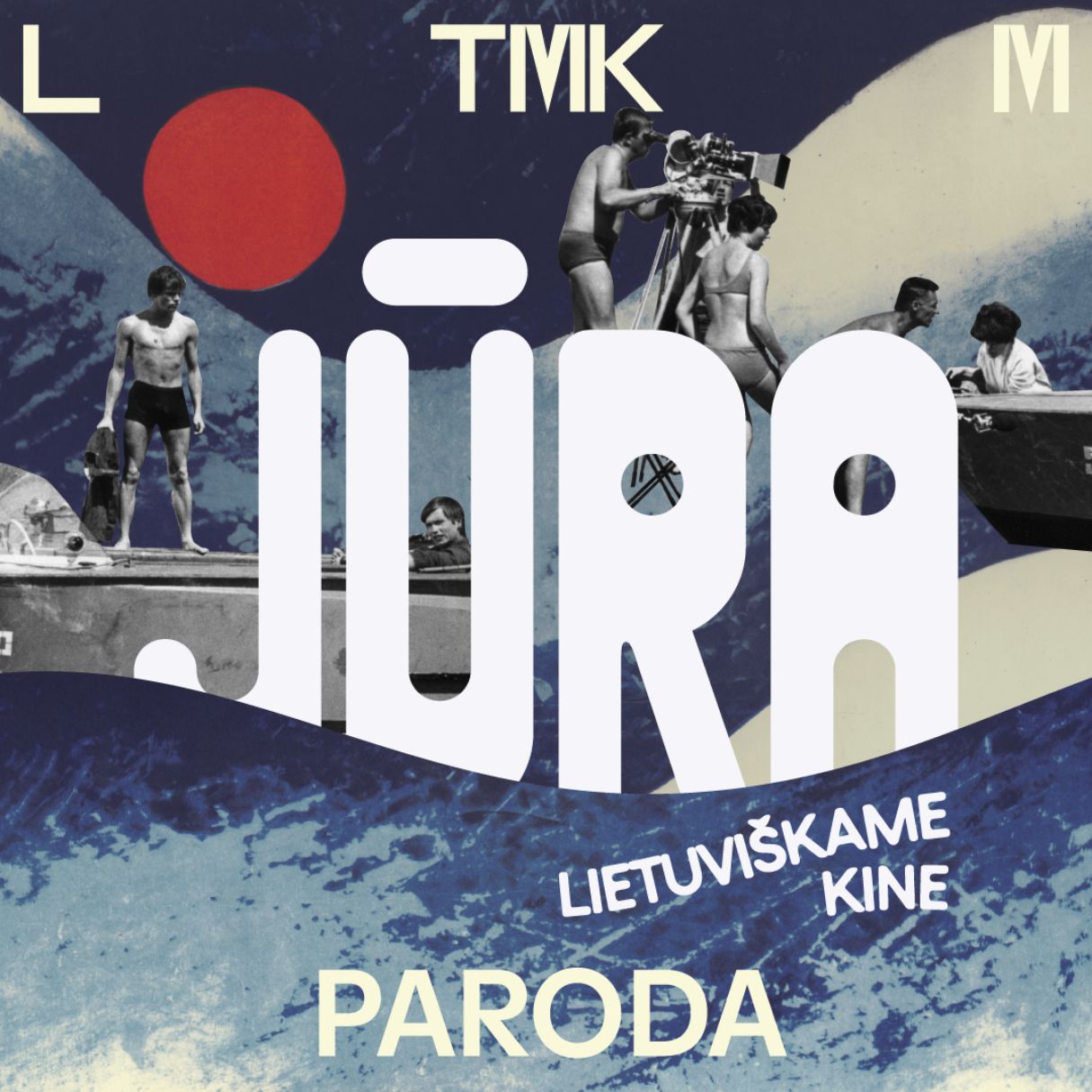
“The Sea in Lithuanian Cinema”, an exhibition by the Lithuanian Theatre, Music and Cinema Museum on display at the Lithuanian Sea Museum, explores the sea as a motif from the early 20th century to the present day. A carefully curated selection of films reveals how the sea’s significance in cinema has evolved—from a realistic landscape and a reflection of historical memory to a metaphor for inner experience, the search for identity, freedom and existence.
“Although the Baltic coast occupies only a small part of Lithuania’s territory, in the Lithuanian cultural imagination the sea has meant far more than a geographical space—it was the country’s gateway to the world, inspired myths and legends, shaped people’s way of life and became one of cinema’s most universal images,” observes the exhibition’s curator, film critic and journalist Auksė Kancerevičiūtė.
The exhibition “The Sea in Lithuanian Cinema” comprises eight sections exploring the many representations of the sea in Lithuanian film. Travelling through different periods and films, visitors are invited not only to observe the sea on screen, but also to hear, feel and experience it as an immersive whole.
Filmmakers have understood and interpreted the sea differently across the decades. In the interwar Lithuanian (1918–1940) newsreel “Palanga in 1929”, the Baltic Sea is portrayed as a place of leisure and togetherness. In later decades, the sea as a motif acquired new meanings, reflecting changes in society, history and cinematic language.
In films from both the late Soviet era and the period following the restoration of Lithuania’s independence, the sea emerges as a force of nature before which human-made order loses its power. It also bears witness to historical memory—recalling the dramatic events of the 20th century, conveying people’s efforts to survive geopolitical upheaval and embodying the pursuit of freedom and the hope of liberation.
Contemporary cinema offers new interpretations of the sea. It often accompanies characters at pivotal moments in their lives, reflecting spiritual crises and the search for identity. Through imagery of the sea, filmmakers explore the experiences of different generations and major societal shifts, such as the rise of capitalism and materialism, changing values and the struggle to find one’s place in a rapidly changing world.
The exhibition will be on display at the Lithuanian Sea Museum until 1 October 2027.


