The Baltic Sea Animal Rehabilitation Centre (BSARC)

6.

In front of you is the room for preparation of food for animals, equipped with a fish freezer nearby. Here, thawed fish is processed as needed.

For newly arrived seal pups, a special fish mixture is prepared, as many have never tasted fish before and may not recognise it as food or be able to swallow it whole. The mixture contains fish, fish oil, beneficial bacteria, Rehydron (to restore salt balance) and enzymes (to break down fats). It is made rich and nutritious to resemble mother seal’s milk (containing about 40–50% fat). All ingredients are ground and blended until smooth, then fed to the pups through a tube.

During the first week, seals are fed 4–5 times a day with this fish mash. Later, they are given whole fish by hand using thick rubber gloves that protect against sharp teeth. As wild predators, seals may bite when stressed.

At this stage, the fish is gently placed into the seal’s mouth and throat to develop the swallowing reflex. Forced feeding usually doesn’t last long – most pups soon start eating on their own. Some skip this stage completely.

Finally, pups are given live fish (usually gobies) to learn hunting and feeding independently, as well as whole herrings to develop natural feeding and competitive behaviour.


NEXT ->


The Baltic Sea Animal Rehabilitation Centre (BSARC)

5.

This is the pool water filtration equipment room. Clean seawater from the museum’s reservoirs flows into the rehabilitation pools. After some time, the used water passes through these pipes into an automatic drum filter which removes fine particles. The self-cleaning filter rinses waste into the wastewater system.

The purified water then returns to reservoirs behind this wall. Pumps send it to the protein skimmer, where organic matter and sea foam are removed. Ozone from an ozonator helps break down impurities, and the decantation chamber neutralises any remaining ozone.

Finally, the water passes through sand filters, where harmful ammonia is converted into harmless nitrates. It then flows through an ultraviolet lamp which destroys pathogens and bacteria before the clean water returns to the outdoor pools.

All of this is done to maintain safe conditions for keeping animals at the Baltic Sea Animal Rehabilitation Centre. 


NEXT ->


The Baltic Sea Animal Rehabilitation Centre (BSARC)

4.

The concept and content of the exposition were developed by the museum’s Education Department in collaboration with biologists Vaida Survilienė, Saulius Karalius and Arūnas Grušas. The visual design was created by the creative studio DADADA and implemented by UAB “Šmikis”.

The exposition aims to introduce visitors to the reasons why animals end up in this centre and to offer possible solutions for creating a safer, more sustainable and cleaner world. This idea is reflected in its title, “I change – sea changes.”

The exposition and its furniture were made from panels produced entirely from waste materials, packaging and microplastics collected from oceans and seas. The tabletops were manufactured from recycled yogurt containers, regenerated medical equipment no longer in use and similar materials. These panels were combined with plywood offcuts and tempered glass. Even the chairs in the centre are examples of reuse – old chairs have been given a second life simply by being reupholstered with a new fabric.


NEXT ->


The Baltic Sea Animal Rehabilitation Centre (BSARC)

3.

The socially responsible retail chain Lidl Lietuva contributes to the welfare of seal pups cared for at the Baltic Sea Animal Rehabilitation Centre. The company runs the initiative “High Five for a Seal,” through which more than €200,000 has already been raised to support the Lithuanian Sea Museum’s Baltic grey seal rehabilitation programme. For every reusable shopping bag made from recycled plastic that is purchased, €0.05 is donated to the museum.

The funds raised have helped to save more than 100 seal pups, to purchase tracking transmitters that allow researchers monitor the animals’ behaviour in the sea and to reduce the amount of plastic waste.

Each year, around 20 or more young seals are cared for at the museum’s rehabilitation centre. The treatment of a single seal pup costs about €1,200.

Part of the funds are also allocated to scientific monitoring — the data gathered from transmitters help assess the success of seal rehabilitation and the state of fish stocks in the Baltic Sea. Since the beginning of the project, more than 20 seals equipped with transmitters have been released back into the sea.


NEXT ->


The Baltic Sea Animal Rehabilitation Centre (BSARC)

2.

Grey seals give birth from late February to early March. They usually have one pup, and only rarely two. Gestation lasts about 11–11.5 months. Newborn pups are 40–75 cm long and weigh around 15 kg. The mother nurses her pup for 17–19 days, during which the pup can gain up to 30–40 kilograms.

At the beginning of March, the Lithuanian Sea Museum receives many calls about grey seal pups washed ashore. People dial 112 to report the location of the seal, its condition and other details that help staff of the museum or other institution reach the weakened animal and bring it to the rescue centre.

Upon arrival, the pups are taken to the animal reception area where biologists or veterinarians examine, clean and weigh them, and also plan further treatment or necessary operations. After the check-up, the animals are moved to the quarantine facilities.

On the wall (“Map of Seal Pups”), there is a stylised representation of the Baltic Sea coast showing the places where the seals were found. Nearby, you can see information boards with brief details about each pup.

What should you do?

  • Don’t drive a seal back into the water.

  • Don’t feed it.

  • Don’t touch it.

  • Keep the pup away from dogs and overly curious people. Let it rest.

  • If possible, wait for specialists from the institutions mentioned above to arrive.


NEXT ->


The Baltic Sea Animal Rehabilitation Centre (BSARC)

1.

Welcome to the Baltic Sea Animal Rehabilitation Centre (BSARC). The aim of this project is to help conserve the biological diversity of the Baltic Sea. To achieve this, we have created a system that meets the highest standards of modern science and animal care practice.

The main architectural concept is inspired by the idea of “walking through the dunes.” The buildings have a unique shape, and their roofs are designed to resemble coastal dune tops. The vegetation growing on the roofs is characteristic of the coastal zone. To minimise visual pollution, a large part of the Centre’s structure is built underground. As you follow the main path, you will be able to visit the public areas of the BSARC and view the open-air pools for birds and seals.

The BSARC’s multifunctional hall is used for educational purposes, such as seminars, conferences, events and learning activities that promote self-discovery and hands-on experiences.

In this part of the exposition (“Crossings”), you can explore two intersections showing how both global and local processes of environmental changes affect nature. Irresponsible consumption, pollution, various industries and inevitable climate as well as environmental shifts harm the ecosystem of the Baltic Sea and its coasts. Here, you can also discover possible solutions and sources of inspiration to help create a safer, more sustainable and cleaner world — for both animals and ourselves.


Please follow the information signs and stay on the designated paths, as many areas of the Rehabilitation Centre are restricted to protect the animals’ health. All facilities are divided into two zones for the staff:

  1. Strict quarantine zone – accessible only to staff responsible for animal care and authorised personnel.
  2. General zone – accessible to all other staff without special permission.


NEXT ->


LAIVAS: Valčių denis – laive esanti erdvė virš pagrindinio denio, kur dvi laivo valtys laukia savo užduočių jūroje. Iš abiejų bortų, kulkosvaidžių aikštelės pasirengusios, kai pratybos šaukia į veiksmą. Grįžus į krantą, ginklai ramiai grįžta į saugų laivo arsenalą. Šalia kamino esanti ventiliacijos šachta – tai gyvybės srautas, aušinantis galingus variklius apačioje, palaikantis laivo energiją ir ritmą, net kai jūra verda iššūkiais. 

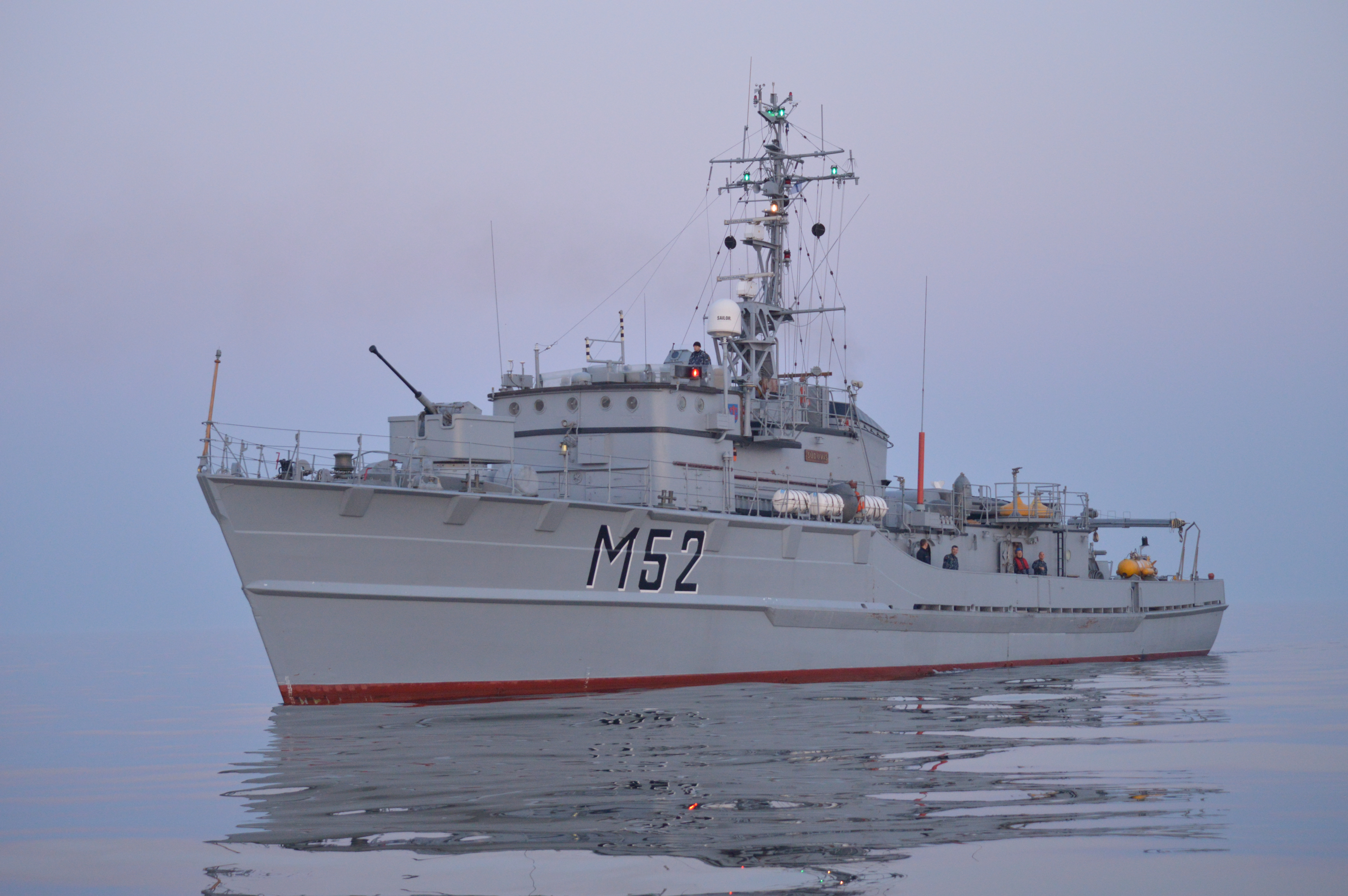
LAIVAS: Baltijos jūra, nors palyginti maža bei sekli, visada buvo patraukli strateginė vieta. Daug kas minavo jos vandenis, norėdami užblokuoti priešo laivus, kad šie negalėtų plaukti. Jos vandenys vis dar slepia daugybę minų. Ne vieną dešimtmetį čia dar bus vykdomos išminavimo operacijos. Aš buvau čia, su savo įgula, saugodamas šią jūrą, valydamas jos kelius.
LAIVO VADAS: Kelionėse į jūrą būdavo visko – ir džiaugsmo, ir nekantrumo, ir iššūkių.
ARTILERISTAS: O dar ilgesys. Ilgesys šeimos ir artimųjų, kai bangos tęsiasi be galo, o krantai atrodo tokie tolimi.
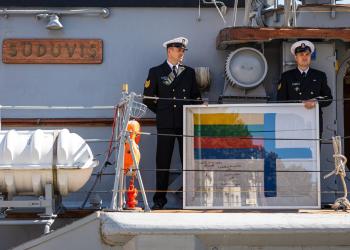
ELEKTROMECHANINĖS KOVINĖS DALIES VADAS II: Dėl nuolatinių gedimų „Sūduvio“ tarnyba buvo sustabdyta. Tačiau jis nebuvo sunaikintas – laivas perduotas Lietuvos jūrų muziejui, jo istorija tęsiasi.
APRŪPINIMO TARNYBOS VADAS: Džiaugiuosi galėdamas prisidėti prie „Sūduvio“ istorijos išsaugojimo. Tai – mūsų istorija. Svajoju apie dieną, kai ateisiu čia su anūkais ir parodysiu jiems: „Čia aš buvau, čia pridėjau rankas.“ Noriu, kad laivas gyventų toliau, kad juo galėtų džiaugtis ateities kartos.
LAIVO VADAS: Mes niekada nepamiršime, kaip jūros bangose mūsų „Sūduvis“ mums šnekėjo. Jis šnekėjo savo jūros sagą – stiprią, nesudaužomą, kaip ir jo įgula. Kapitonas leitenantas Vytautas Šakalis kadaise pasakė: „Sūduvis“ išmagnetinimo niekada nepraeitų, nes įgula geležinė.“ Ir būtent ši įgula, jos stiprybė ir ryžtas, buvo tikrasis laivo variklis.
LAIVAS: Aš galbūt ir nebeplauksiu, bet mano siela – šis geležinis ryšys su įgula – visada liks. Ir net kai mano korpusas stovės ramiai, aš būsiu čia, primindamas apie tuos metus jūroje, apie tuos, kurie su manimi plaukė per bangas ir audras.

LAIVAS: Mano tarnyba baigta.

2021 m. laivas baigė tarnybą ir buvo perduotas Lietuvos jūrų muziejui, kuris, pritaikęs jį muziejinei ir edukacinei veiklai, kviečia visuomenę pažinti laivo ir įgulos narių istoriją. Kiekvienam lankytojui tai unikali proga susimąstyti apie jūrinės valstybės vertę ir prisiminti, jog jūrinė kultūra yra neatsiejama mūsų dalis.


Projekto kūrybinė grupė:
Mindaugas Žvirgždys (koncepcijos ir teksto autorius) 
Virginija Rimkaitė (scenarijaus teksto autorė)
Kristijonas Lučinskas (Kompozitorius, garso režisierius) 
Mikalojus Urbonas (pagrindinio veikėjo balsas)
Vitalijus Aleksandravičius (Aprūpinimo tarnybos vadas – laivo bocmanas)
Andrius Kiela (Sistemininkas)
Darius Auškelis (Sistemininkų komandos vadas)
Justas Žaglinskis (Elektromechaninės kovinės dalies vadas I)
Tomas Abromavičius (Elektromechaninės kovinės dalies vadas II)
Edgaras Padimanskas (Virėjas)